Best Desktop DAC/Amps for a Work Desk 2026: 3 Picks
One box, two boxes or a streamer, and do you need one at all? The Topping DX5 II runs headphones and monitors with EQ, the iFi Zen DAC 3 fixes a weak laptop jack on one USB-C cable, and the WiiM Ultra streams to speakers but isn't a dedicated headphone amp.
This article contains affiliate links. We may earn a commission at no extra cost to you. Learn more
Featured in this Guide
WiiM
Ultra
- •It streams from the network to speakers via RCA and subwoofer outs. What Hi-Fi? and Digital Trends rate it highly; ASR faults its headphone jack.
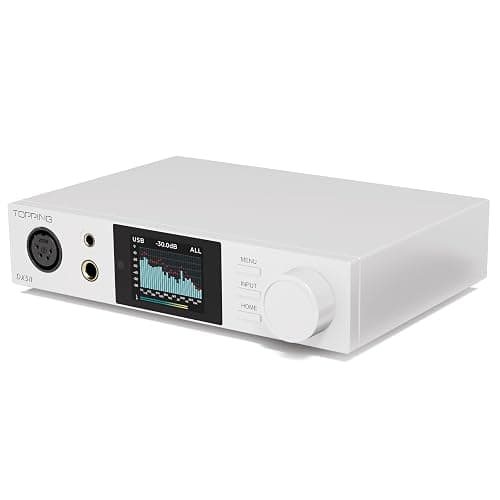
Topping
DX5 II
- •Owners of mixed headphones get 4-pin XLR
- •4.4mm and 6.35mm jacks side by side
- •so each pair plugs in without an adapter.
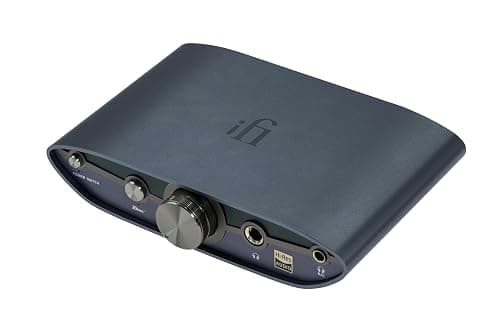
iFi
Zen DAC 3
- •It draws power from the laptop’s USB-C port
- •so there’s no extra brick
- •and a balanced jack gives your headphones a cleaner feed than the built-in output.
The Short Answer
All three picks tie at 8.8 on the DeskGear Composite Score, so choose by desk configuration rather than a headline number. For wired headphones, compare the Topping DX5 II with the iFi Zen DAC 3; the WiiM Ultra is a streaming preamplifier for powered monitors rather than a dedicated headphone amplifier.
Buyers arrive at this question from several directions. A Headphones.com Community member shopping for a Sennheiser HD 800S put the first dilemma plainly: "My first dilemma is either go with DAC/Amp or Amp alone." An Audio Science Review forum poster complained that "my motherboard's audio is horrible". The skeptics deserve attention too, because a Hacker News commenter found that "the headphone jack on the MacBook Air sounds pretty great to me through my mid-price Hifiman cans." Competent converters can sound alike, so this guide ranks practical differences: amplifier power, connectors, monitor outputs, equalization and desk ergonomics, from a 0.456kg USB-C box to a 1.42kg streamer. Every pick carries the DeskGear Composite Score, a weighted formula of Expert Consensus 30%, Effectiveness 25%, Build Safety 20%, Durability 15% and Value 10%.
WiiM Ultra vs DX5 II vs Zen DAC 3
Display & Audio Setup
Chart
 DeskGearHQ.com
I want to stream Tidal or Qobuz to my powered monitors without my computer: WiiM Ultra
WiiM Ultra
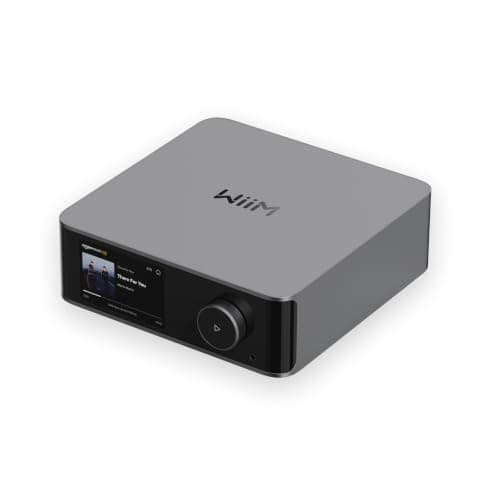
(Current price, subject to change)
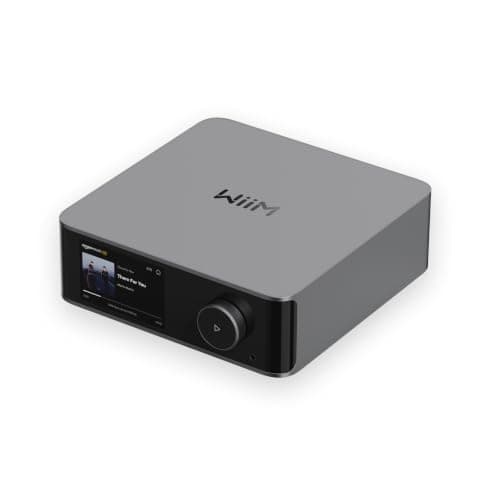
The WiiM Ultra earns its place as a streaming preamplifier rather than a dedicated headphone amplifier. What Hi-Fi? reviewed it in February 2025 and awarded 5/5, and Digital Trends rated it 9/10, calling it "a stunning streaming value" if you can overlook the missing AirPlay. On a desk it streams Tidal, Qobuz and Spotify without a computer, while its RCA line output and subwoofer output deliver audio straight to powered monitors. The publication also lists optical, HDMI ARC, phono and analog inputs on this 1.42kg box. WiiM's spec sheet says its USB-A port plays files from a storage drive and can send digital audio up to 24-bit/192kHz to an external USB DAC. There is no USB input from a computer, so a computer connects through optical, Bluetooth or casting, and Digital Trends' reviewer regretted that there's no computer audio connection or AirPlay. Audio Science Review said it "nails streaming performance", then measured the front jack and concluded: "Headphone output is not useful for serious listening." The same review found the rear labels difficult to read and no power switch. If wired headphones are your main listening, pair it with a combination unit or choose one of the two below.
What We Love
- Streams Tidal, Qobuz and Spotify to powered monitors without a computer
- Optical, HDMI ARC, phono and RCA inputs, plus RCA line and subwoofer outs
- What Hi-Fi? rated it 5/5, Digital Trends 9/10, and ASR recommends it as a streamer
What Could Be Better
- ASR says the headphone output is not useful for serious listening
- No USB input from a computer (the USB port is storage and audio out only), and no AirPlay
- Rear labels are hard to read and there’s no power switch, per ASR
The Verdict
If you want Tidal or Qobuz on powered monitors without your computer, the WiiM Ultra is the streamer route. What Hi-Fi? rated it 5/5 and Digital Trends 9/10. It isn't a dedicated headphone amp: Audio Science Review found its jack not useful for serious listening, so a headphone-first desk should look at the combos.
I own several headphones with different plugs: Topping DX5 II
Topping DX5 II
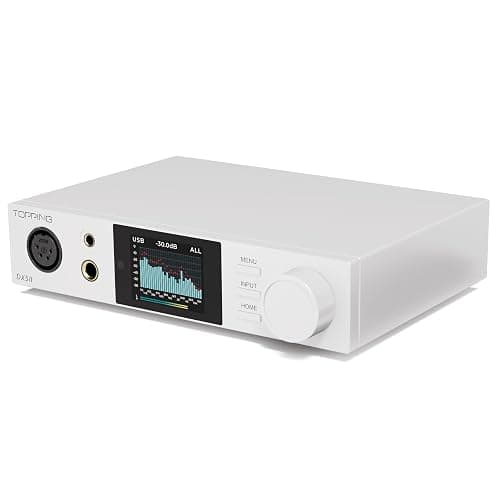
(Current price, subject to change)
The Topping DX5 II, built on 2x ES9039Q2M chips, suits a desk handling more than one audio job, and it leads on Effectiveness, weighted at 25% of the DeskGear Composite Score. Trusted Reviews lists balanced 4.4mm, single-ended 6.3mm and balanced XLR headphone connectors across the front. At the back, XLR and RCA outputs run at preamplifier or line level for powered monitors. Optical, coaxial and Bluetooth LDAC inputs enable a television, console or phone to share the same converter. Audio Science Review measured distortion and noise as "vanishingly small", placing it among the forum's "top-20 best ever DACs". TechRadar and Trusted Reviews each rated it 4.5/5, and Simon Lucas wrote both reviews; at TechRadar he called it "a very serious proposition indeed." Secrets of Home Theater and High Fidelity called it "A flexible, and superb sounding DAC/Headphone amp at a price that makes you smile." In both reviews Lucas also identifies brightness, writing at TechRadar that it "Can easily tend towards sonic brightness", while Headfonics considers the stock tuning "lacks bass warmth and body". The ten-band parametric equalizer is the integrated remedy for both complaints, exchanging a warm, forgiving default for adjustable, personalized tuning.
What We Love
- Three headphone jacks, including 4-pin XLR, so most cables plug straight in
- Balanced XLR and RCA outs run at preamp or line level for powered monitors
- Parametric EQ with saved profiles, backed by ASR’s top-tier measurements
What Could Be Better
- Simon Lucas, who reviewed it for TechRadar and Trusted Reviews, says it can tip toward a bright sound
- Headfonics finds the stock bass lean, and the main power switch is at the back
- Windows needs a driver for USB-B, and early firmware quirks needed updates
The Verdict
If your desk runs powered monitors as well as headphones and you want EQ that lives in the box, the Topping DX5 II fits the brief. Audio Science Review ranks it among its top-20 DACs, and three jacks cover almost any cable. The trade is tone: Simon Lucas, reviewing it for both TechRadar and Trusted Reviews, hears a bright lean, and Headfonics finds the stock bass thin until you EQ it.
My laptop headphone jack is the weak link and my desk is small: iFi Zen DAC 3
iFi Zen DAC 3
(Current price, subject to change)
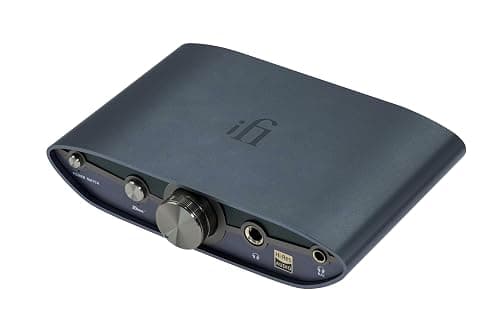
The iFi Zen DAC 3 addresses a narrower problem and resolves it efficiently. Its only signal input is USB-C, and TechRadar notes this socket "can also be used to power the iFi at the same time". Trusted Reviews adds that a 5V socket accepts an optional iFi adapter, which frees the USB-C connection for data and delivers a cleaner electrical signal. The front panel carries a 6.3mm jack and a balanced 4.4mm jack, while the rear RCA and balanced outputs switch between fixed and variable operation. That arrangement lets it operate as a preamplifier for powered monitors. PowerMatch adds amplification for demanding headphones and XBass+ emphasizes the low frequencies, although TechRadar calls XBass+ "probably too much of a good thing". TechRadar and Trusted Reviews each reviewed it and awarded 5/5, and Simon Lucas wrote both reviews, while What Hi-Fi?, with a different reviewer, gave 4/5 and described a "play-it-safe approach". TechRadar's own criticism adds that it is no fan of substandard headphones or heavily compressed files. It also leads on the Value factor, which carries 10% of the composite. For one computer, one good pair of wired headphones and a compact desk, it covers the whole job.
What We Love
- One USB-C cable from the computer carries both power and audio
- Balanced 4.4mm on the headphone side and on the rear line out
- Small enough to sit beside a laptop stand without crowding the desk
What Could Be Better
- USB-C is the only input, per What Hi-Fi?: no optical, coax or Bluetooth
- What Hi-Fi? says it “lacks a little verve and punch”, and there’s no PEQ
- The sample-rate light around the dial disappears when viewed head-on
The Verdict
If your laptop’s headphone jack is the weak link and desk space is tight, the iFi Zen DAC 3 is a sensible pick for that setup. Power and audio arrive over one USB-C cable, and a balanced jack is there when you want it. Its strength is simplicity, not raw power, which suits a one-computer desk where better headphone sound is the whole goal.
How We Score: DeskGear Score
DeskGear Score
Score Formula
DeskGear Score = (Expert Consensus × 0.30) + (Effectiveness × 0.25) + (Build Safety × 0.20) + (Durability × 0.15) + (Value × 0.10)Score Factors
- Expert Consensus (30%)How strongly the trade-review, ergonomics-research, and specialist sources we cite endorse the product or its category. The single largest weight, because it is the only factor that doesn't depend on a single editor's judgment.
- Effectiveness (25%)Whether the product actually does what its category requires, judged against the functional standards described in the source stack (e.g., monitor color accuracy adequate for design work; chair adjustment range covering the body sizes the spec sheet advertises).
- Build Safety (20%)Electrical, material, and structural soundness for daily desk use: UL/ETL certification, off-gassing disclosures, BIFMA testing, wattage-handling claims, and known failure modes. A safety shortcoming caps the score regardless of effectiveness.
- Durability (15%)Build quality and longevity, triangulated from manufacturer documentation, brand warranty terms, and practitioner-community failure reports across multiple years of 8h/day use.
- Value (10%)Price relative to the field, on the dated lastProductCheck shown in every guide. Re-checked monthly; we update the score if the price-to-field relationship moves.
DeskGear Score — Ranked
WiiM Ultra
8.8/10A streamer for powered monitors, not a dedicated headphone amp; it leads on Expert Consensus.
Topping DX5 II
8.8/10For the desk where one box runs headphones, powered monitors and EQ; it leads on Effectiveness.
iFi Zen DAC 3
8.8/10For a single laptop on a compact desk; it leads the combos on Expert Consensus and has the best Value.
One box, two boxes or a streamer?
A combination unit puts the converter and headphone amplifier in one chassis, with one power supply, one switch and one USB cable. The DX5 II and Zen DAC 3 both follow that design, as do most of the unscored units below. A separates stack divides the jobs, and one example pairs the Topping E70 Velvet converter with the Topping L70 amplifier. That arrangement means two separate boxes, two power cords and two independent switches. One stack owner on the Headphones.com Community described the cost: "Both devices run pretty hot so I like to power them down when I am not using them. The on / off switch is in the back and it is a pain to access." The conventional remedy is a 12V trigger connection. Another member described it as a "12v trigger output so your headphone amp and DAC will turn on automatically when you turn the streamer on." A streaming DAC plays Tidal or Qobuz without a computer, which is why one buyer wanted "a streamer with Tidal built in" to avoid the Roon fee. Compared to a combination unit, a streamer usually needs a separate amplifier for wired headphones. Headfonics listened to the Eversolo DMP-A6 Gen 2 through separate headphone amplifiers, and Audio Science Review found the WiiM Ultra's "Headphone output is not useful for serious listening." The Cayin iD6 and Chord Qutest are worth considering, but an Amazon search on 2026-10-04 returned no listing for either, so neither appears in this comparison.
USB start-up glitches are a recurring complaint about desktop converters, a category risk rather than a fault of any pick here. An ASR forum owner of a Fosi K5 Pro, which this guide doesn't cover, said it "gets stuck in a loop" and pops "every 2 seconds". The detail that matters for diagnosis came next: "It ONLY fails on a cold boot." If you encounter something similar, try a different USB port or cable before blaming the converter itself. Drivers are the other variable, because Trusted Reviews notes that the DX5 II's USB-B input requires a driver on a Windows computer, so install it before connecting.
Power delivery is the next practical decision. The Zen DAC 3 operates on bus power from your computer's USB-C port, which keeps the desk to a single cable. An optional 5V supply, sold separately, moves the power requirement off the USB connection. The DX5 II plugs into the wall instead and keeps its main switch on the back, the same friction the two-box owner above complained about. Headfonics notes that Topping partially mitigates the inconvenience with a standby function on the front volume knob. Audio Science Review found no power switch on the WiiM Ultra or within its software interface. If you build a stack, look for 12V trigger connections, which enable one component to activate the others automatically, so you never reach behind the desk. An Audio Science Review forum thread also covers desktop units requiring a USB-C PD supply rated 20V/3A. Confirm the power requirement before ordering, versus assuming any laptop charger will operate it properly.
The Setup Effort row in the comparison chart quantifies these installation chores independently of the DeskGear Score. It begins at 1 and adds 3 for each requirement the manufacturer or a cited review documents: a separate wall-power cord, a Windows driver, or an app-driven configuration. The WiiM Ultra requires a power cord plus its companion application, and the DX5 II requires a power cord plus a Windows driver, so each registers 7. The Zen DAC 3 operates on USB bus power, and iFi states it connects without additional drivers, so it registers 1.
Parametric EQ adds firmware to the list of things that can go wrong. Headfonics reviewed the DX5 II and flagged early firmware quirks, which later updates addressed. Before buying any PEQ combo, check that the maker still ships updates and that its EQ software runs on your computer. An ASR forum member surveying PEQ combos saw "many reports of implementation faults that hopefully will get corrected with firmware updates".
Others we looked at (not scored)
We found no published review with a rating for any of the units below, so none has a DeskGear Score. These entries are informational notes rather than rankings. The FiiO K13 R2R combines a resistor-ladder converter with parametric equalization and XLR plus 2x RCA line outputs. Its chassis alternatively accepts an external 12V/2.5A power adapter, and Headfonics reviewed it and says buyers after "a warm, organic sounding DAC/AMP" should consider it seriously. One Headphones.com Community owner, who upgraded from a two-box stack, wrote: "The sound of the k13 is great but it doesn't have much power." Another owner on the Audio Science Review forum reported an OVEREER error with FiiO FT3 headphones, and that discussion never identified a definitive cause. The FiiO K7 is the long-running, uncomplicated balanced option, with 2x AK4493SEQ converters and a FiiO rating of 2000mW at 1% THD+N. Headfonics says its 2W output makes it "nearly as powerful as the K9 Pro ESS". The Fosi Audio K7 adds a microphone input for conference calls and videoconferencing. Audio Science Review reviewed it and recommended it "both as a general DAC+HP amp and a gaming product." The Fosi Audio ZH3 uses 4x OPA1612 operational amplifiers and has XLR and RCA outputs plus an analog input. ASR's reviewer called that input "a major hit for people like me who also need to integrate an analog source." The FiiO K11 R2R is a compact, roughly 0.42kg unit powered by an external 12V adapter. Headfonics frames it as an affordable introduction to R2R sound.
The HIFIMAN EF400 is an R2R combination from a headphone manufacturer, with every connector type, 4-pin XLR included. Its Headfonics review noted an official power rating per channel but sparse specifications otherwise, and listed limited inputs and a rear power switch as drawbacks. The Topping DX3 Pro+ is an older compact combination with LDAC Bluetooth and 2x coaxial inputs. Audio Science Review reviewed it and called it "everything you need in a compact and attractive unit", although it found limited capability into low-impedance headphones. The Creative Sound Blaster G8 targets computer and console desks with a microphone input, 2x USB-C inputs and HDMI ARC, and Creative specifies 130dB of dynamic range. Stuff called it "A gaming-focused DAC/amp" with "powerful customisation options", while noting it is less refined for pure music listening.
The separates route has no scored product, and the WiiM Ultra is the only scored streaming component. The Topping E70 Velvet is the DAC half of a two-box stack, with an AK4499EX chip and LDAC Bluetooth, and its Amazon listing quotes distortion as low as -125dB. We found no English-language review of the Velvet, and the Audio Science Review measurements of the original E70 don't transfer, because it uses a different converter chip. The Topping L70 is the matching amplifier, with relay volume control and four headphone connectors. Audio Science Review reviewed it and wrote: "It is my pleasure to recommend Topping L70 headphone amplifier." The Eversolo DMP-A6 Gen 2 streams Tidal and Qobuz and is certified Roon Ready. Headfonics praised "the best UI and mirror-control experience" it had tried in a streamer, and ran it into separate headphone amplifiers for listening. An Audio Science Review recommendation is a verdict rather than a numerical rating, so none of these enters the score calculation.
When NOT to Buy
If your laptop's jack already drives your headphones cleanly, a DAC/amp may add little, as the Hacker News commenter with Hifiman headphones found. If you want EQ and listen from a PC, an ASR forum member pointed out that you can get it "for free by using EAPO", meaning the open-source EqualizerAPO. And if you record, an XLR audio interface already includes a headphone amp; our XLR interfaces guide covers that route. If the speakers are what you want to upgrade, start with our studio monitors guide or our computer speakers guide.
Who Should Buy What
Who Should Buy What
| If you are… | Recommended pick |
|---|---|
Streaming to powered monitors Your speakers matter more than your headphones, and you want Tidal, Qobuz or a TV to play through them without waking the computer. | WiiM Ultra |
Desk with powered monitors and EQ You want one box to run headphones and powered monitors, switch between them, and keep an EQ profile for each output. | Topping DX5 II |
Small laptop desk, one cable You work from one laptop, want better headphone sound than its built-in jack, and would rather add a single USB-C cable than a power brick. | iFi Zen DAC 3 |
Several headphones, several jack types You own headphones with 4-pin XLR, 4.4mm and 6.35mm plugs and want each on its own jack, without adapters. | Topping DX5 II |
Frequently Asked Questions
Do I need a DAC and an amp for headphones, or is my laptop's headphone jack enough?
Often the jack is enough. If it plays your headphones loud enough, without hiss or strain at the volume you use, a DAC/amp adds little. Upgrade when you hear background hiss with sensitive earphones, run out of volume with harder headphones, get noise from a PC's motherboard audio, or need a line out to powered monitors.
Should I buy a DAC/amp combo or separate DAC and amp boxes?
For most work desks, a combo: one power supply, one switch and less cabling. Separates make sense if you want to upgrade the DAC or the amp on its own later, or want amp features a combo lacks. If you go two-box, pick a pair with 12V trigger links, such as the Topping E70 Velvet and L70, so one switch powers both.
What is a streamer-DAC, and can it drive my headphones?
A streamer-DAC plays Tidal, Qobuz or Roon over your network without a computer, then sends analog audio to an amp or powered speakers. Many are not headphone amps. Headfonics listened to the Eversolo DMP-A6 Gen 2 through separate headphone amplifiers, and Audio Science Review found the WiiM Ultra's headphone jack not useful for serious listening. Plan to pair either one with a headphone amp or a combo.
Can one DAC/amp feed both my headphones and my studio monitors?
Yes, if it has a line or preamp output. The Topping DX5 II has XLR and RCA outs that work at preamp or line level, per Trusted Reviews, and the iFi Zen DAC 3 has RCA and balanced outs with a fixed/variable switch. In preamp or variable mode the DAC's knob sets speaker volume; in fixed or line mode the monitors' own volume controls do.
How much amp power do I actually need for my headphones?
Usually less than spec sheets imply. A Headphones.com Community member advising a Sennheiser HD 800S owner wrote that “pretty much any modern desktop amp will do.” Inefficient planar or high-impedance headphones need more output, while sensitive earphones need a quiet background more than power. Compare your headphones' sensitivity and impedance with the amp's rated output at that impedance.
Why does my USB DAC pop or disappear when my PC cold-boots?
It is usually a USB start-up problem seen across brands, not a flaw in one model. An ASR forum owner of a Fosi K5 Pro reported a rhythmic popping loop that only happened on a cold boot. Try a different USB port, ideally one on the motherboard rather than the case, a different cable, Windows' USB power-saving setting, and the maker's latest driver and firmware.
Is built-in parametric EQ worth paying for if I can use EqualizerAPO on my PC?
Not if every source is that one PC; EqualizerAPO applies parametric EQ for free. Hardware EQ earns its place when you switch between sources, such as a phone over Bluetooth, a console, or a work laptop where you can't install software. The profile lives in the box, so it applies to every input.
Do I need a DAC/amp if I already have an XLR audio interface?
Probably not. An XLR audio interface already contains a DAC and a headphone amp. A separate DAC/amp makes sense if the interface's headphone output runs out of volume, hisses with sensitive earphones, or lacks the balanced jacks or EQ you want.
Bottom Line
Get the WiiM Ultra if You want streaming services on powered monitors without a computer, and headphones are a side use..
Get the Topping DX5 II if You want one box for headphones, powered monitors and EQ, with inputs for more than one source..
Get the iFi Zen DAC 3 if You want a simple, compact upgrade over a laptop jack, powered by a single USB-C cable..
Want a two-box stack or a different streamer? The Topping E70 Velvet with L70 and the Eversolo route are covered above, unscored.
Sources & Methodology
Methodology: DeskGear Score — Formula: DeskGear Score = (Expert Consensus × 0.30) + (Effectiveness × 0.25) + (Build Safety × 0.20) + (Durability × 0.15) + (Value × 0.10). Factors: Expert Consensus (30%): How strongly the trade-review, ergonomics-research, and specialist sources we cite endorse the product or its category. The single largest weight, because it is the only factor that doesn't depend on a single editor's judgment. | Effectiveness (25%): Whether the product actually does what its category requires, judged against the functional standards described in the source stack (e.g., monitor color accuracy adequate for design work; chair adjustment range covering the body sizes the spec sheet advertises). | Build Safety (20%): Electrical, material, and structural soundness for daily desk use: UL/ETL certification, off-gassing disclosures, BIFMA testing, wattage-handling claims, and known failure modes. A safety shortcoming caps the score regardless of effectiveness. | Durability (15%): Build quality and longevity, triangulated from manufacturer documentation, brand warranty terms, and practitioner-community failure reports across multiple years of 8h/day use. | Value (10%): Price relative to the field, on the dated lastProductCheck shown in every guide. Re-checked monthly; we update the score if the price-to-field relationship moves.
Expert review sources used in this analysis:
- This guide draws on published reviews from TechRadar, Trusted Reviews, What Hi-Fi?, Digital Trends, Audio Science Review, Headfonics, Secrets of Home Theater and High Fidelity, and Stuff
- Owner reports come from the Headphones.com Community, the Audio Science Review forum and Hacker News
- Scores use the DeskGear Composite Score formula published on our methodology page
- Each outlet rating is normalized to a ten-point scale and each factor is weighted as listed above, while Build Safety (20%) is provisional for all three picks
- WiiM's USB audio output figures come from its Ultra specification page
- Product details were verified 2026-10-04.
Nicholas Miles is the founder of DeskGearHQ and a longtime smart home enthusiast focused on helping everyday homeowners make better technology decisions. He researches, compares, and writes about products across security, climate, lighting, leak prevention, sensors, home energy, and automation, with an emphasis on real-world usefulness, ecosystem compatibility, reliability, privacy, and long-term value.
Affiliate disclosure: DeskGearHQ earns affiliate commissions on qualifying Amazon purchases. Our scoring methodology is independent of affiliate relationships.