Best Saddle Stools for a Desk 2026: 4 Picks
A saddle stool opens your hip angle through seat shape alone — no balancing, no backrest. Four genuine saddle seats compared on seat geometry, cylinder range and warranty, with an honest read on how thin the clinical evidence really is.
This article contains affiliate links. We may earn a commission at no extra cost to you. Learn more
Featured in this Guide
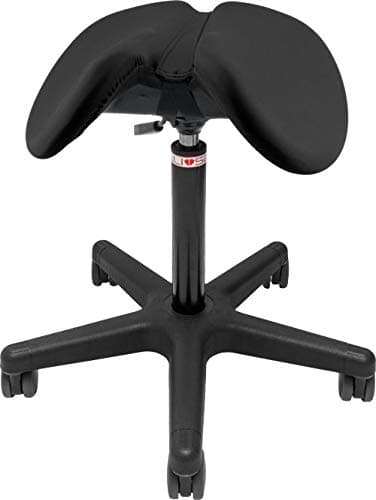
Salli
Light Basic Saddle Seat
- •For the desk worker who wants the real mechanism without flagship money — a grooved saddle
- •four gas-spring ranges
- •and a 100 kg rating.
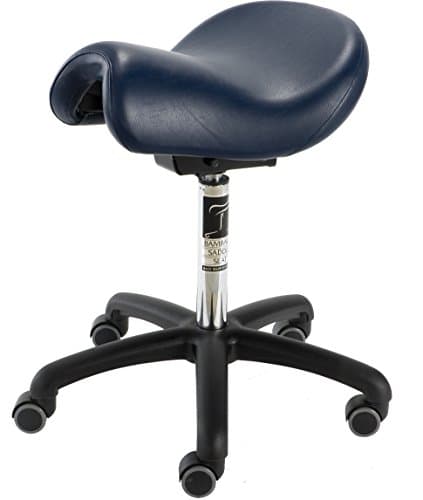
Bambach
Saddle Seat
- •For the buyer who needs the seat sized — the original 1988 pommel saddle
- •built in four seat sizes
- •with a 5-year Australian warranty.
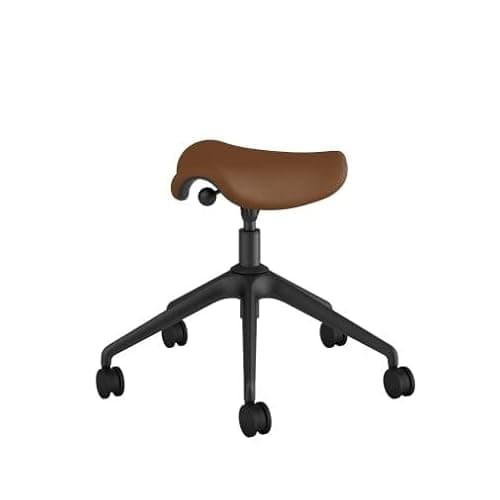
Humanscale
Freedom Active Pony Saddle Stool
- •For a perch beside a proper chair — 7 degrees of tilt
- •full-grain chrome-free leather
- •and a 15-year structural warranty term.
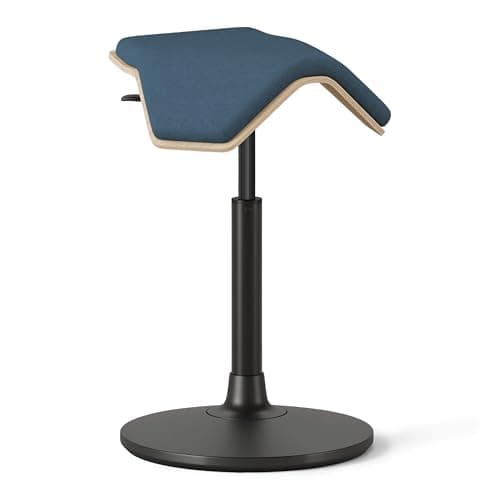
Branch
Saddle Stool (ILOA Plus)
- •For a standing desk — a 23.6 to 33.5 in cylinder rated to 265 lb
- •though its wobble base adds balancing a pure saddle avoids.
The Short Answer
For most desk buyers the Salli Light Basic is the recommendation, delivering genuine divided-saddle geometry across four gas-spring configurations under a 5-year warranty. Treat any saddle stool as a complement to a conventional chair rather than a replacement, because the posture is genuinely acquired.
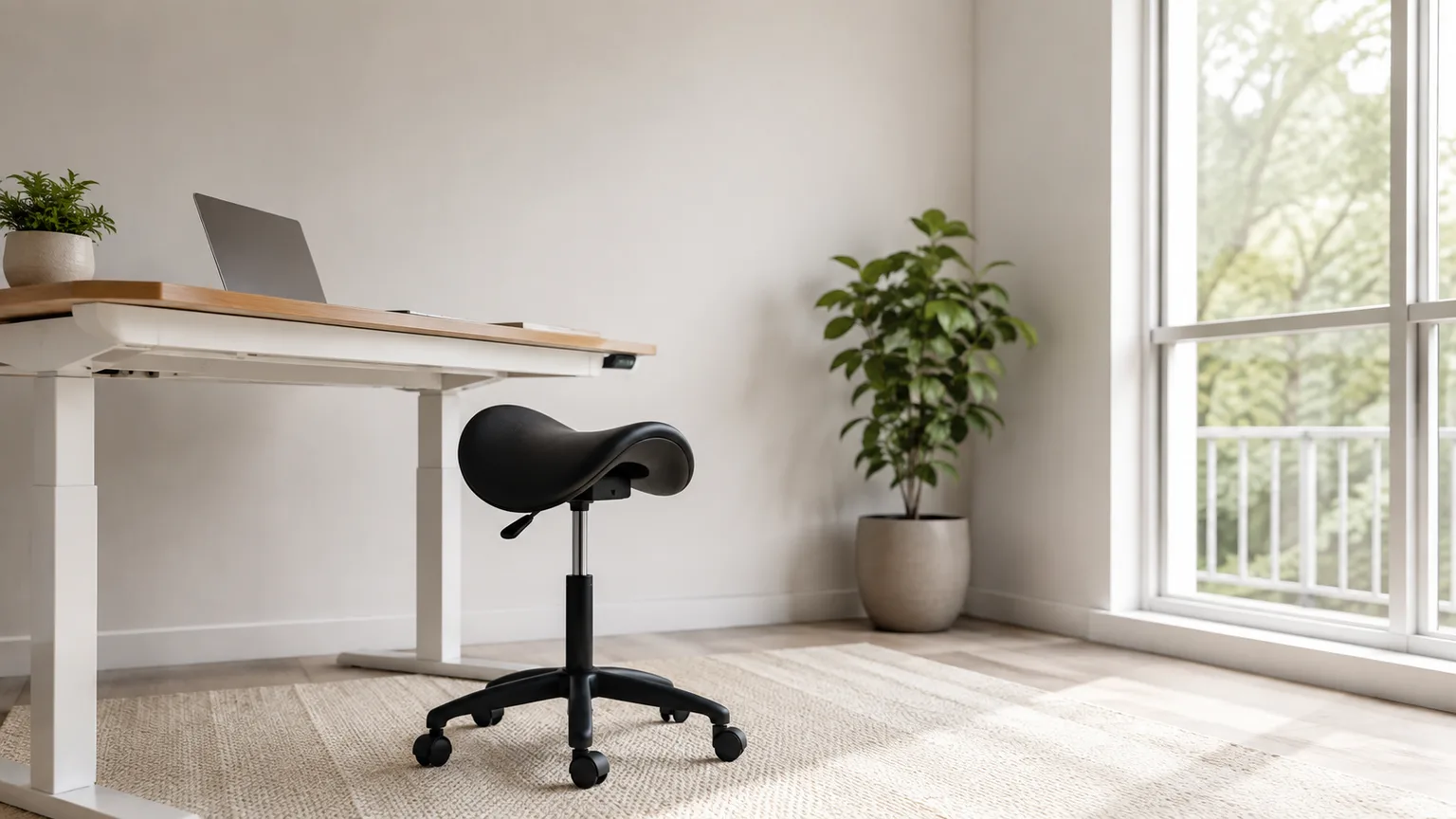
A saddle stool is not a wobble stool. The contoured seat drops your thighs roughly 45 degrees below horizontal and rotates your pelvis forward, so your lumbar curve maintains its own shape. That is why these stools ship without a backrest. Compared to a wobble stool, which demands continual muscular correction against a deliberately unstable base, the saddle mechanism is passive geometry. Our weighted DeskGear Saddle Stool Score composites five normalized factors, weighting seat geometry heaviest, then adjustability and build durability. As of August 2026, treat the clinical marketing skeptically. The peer-reviewed base is small, dentistry-specific, and partly manufacturer-linked, and its central meta-analysis reported heterogeneity of 95% across only two trials. That meta-analysis still concluded there was moderate evidence of lower ergonomic risk from saddle seats. One 60-person investigation found saddle sitting increased lumbar lordosis while also increasing protraction in the cervical spine.
Four saddle stools compared side by side
Ergonomic Foundations
Chart
 DeskGearHQ.com
Best overall: Salli Light Basic Saddle Seat
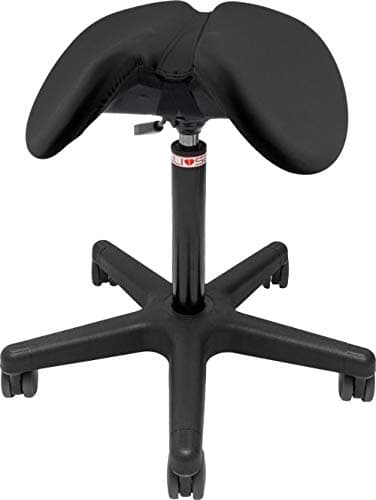
Salli is the Finnish manufacturer most closely associated with the divided saddle seat. Its published specification is unusually precise. Salli describes the Light Basic seat as a single polyurethane piece with a groove down the middle, while filing the Light range under its two-part seat category. That groove is the point, because Salli argues publicly that a solid saddle compresses the pelvic floor. Four gas springs cover 400 mm to 875 mm, the widest configuration ladder in this guide. Salli publishes a 5-year warranty, though its Australian distributor lists a shorter 2-year term. Salli states the limitations plainly: a 100 kg capacity, with no tilt or swing mechanism. The peer-reviewed work involving Salli seats amounts to one 2014 investigation of 90 dental students, which deliberately combined the chair with a magnification system. Its reported effect sizes are implausibly large for seat geometry alone. Compared to the manufacturer specification, that evidence remains weak. The Basic designation also matters more than it sounds. Salli sells its tilt and swing mechanisms as separate and more expensive models, making the Basic the deliberately static configuration. For a desk that already adjusts, that is frequently the correct trade.
What We Love
- Salli describes the seat as a single polyurethane piece with a groove down the middle, which is the divided geometry this category is built on.
- Four gas-spring lengths span 400 mm to 875 mm. You match the cylinder to a normal desk or a standing desk rather than compromising.
- Salli's own site publishes a 5-year warranty, matching Bambach's term on the seat above it.
- At roughly 6 kg it moves easily between a desk and a workbench.
- Wool covers and eight caster types suit a hard floor, a carpet, or a static-sensitive bench.
What Could Be Better
- The Basic is fixed: no tilt, no swing.
- Rated to 100 kg, the lowest capacity here and a genuine exclusion for some buyers.
- The standard seat is bare polyurethane; fabric covers cost extra.
The Verdict
If you want the saddle mechanism from the maker most associated with it, the Salli Light Basic Saddle Seat is the sensible entry. The 8.6 reflects a grooved seat, four cylinder ranges, and Finnish manufacturing with a published 5-year warranty. The Basic is the fixed model, so you give up the tilt and swing mechanisms Salli sells further up its range.
Best clinical pedigree: Bambach Saddle Seat
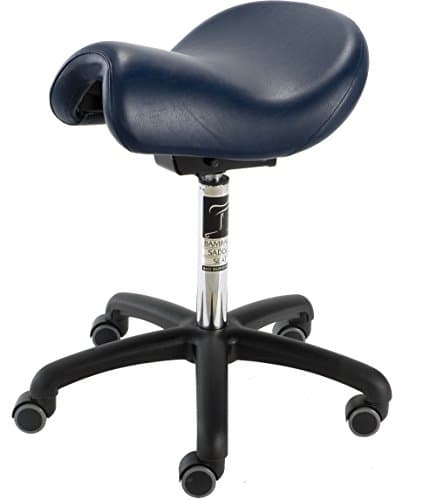
The Bambach carries the most history of anything here. Mary Gale, an occupational therapist, developed it in 1988 after observing how horse riding improved trunk control in her patients. The seat is genuinely one-piece, with a raised front pommel and no central division, which distinguishes it from the Salli approach. Bambach's 5-year warranty covers frame, gas lift, and upholstery together. Its clinical reputation, however, deserves scrutiny rather than repetition. The best available synthesis is a 2018 systematic review on PubMed Central covering two investigations and 150 dental students. Those trials scored posture from static images, and the authors who reviewed them reported 95% heterogeneity alongside no power calculation in either. Their stated conclusion was moderate evidence that saddle seats carried lower ergonomic risk than conventional seats. An earlier 2007 investigation of four subjects recorded the trade-off directly: reduced lower back discomfort, but higher discomfort in the lower limbs, particularly the hips and buttocks. It measured immediate effects only. Configuration is where Bambach separates itself. Three gas-lift lengths, backed and backless variants, surgical-grade vinyl, and antimicrobial finishes are all catalogue choices. Bambach additionally instructs buyers that a traditional desk needs raising to suit the seat.
What We Love
- Mary Gale, an Australian occupational therapist, designed it in 1988. She had watched horse riding improve trunk control in her patients.
- Bambach builds it in four seat sizes — Narrow, Small, Medium, and Executive — the most serious fit system in this guide.
- The 5-year warranty runs across the frame, the gas lift, and the upholstery rather than excluding the wearing parts.
- It is designed, manufactured, and assembled in Marrickville, New South Wales, with surgical-grade vinyl and antimicrobial finishes available.
- Three gas-lift lengths and an optional backrest let the same seat suit a low bench or a tall desk.
What Could Be Better
- Bambach publishes no user weight rating we could verify.
- A single marketplace listing offers no choice of seat size, lift length, or backrest.
- The 2007 four-subject study reported higher discomfort in the hips and buttocks alongside the reduced lower back discomfort.
The Verdict
If fit is your deciding variable, the Bambach Saddle Seat is the one built around it. The 8.3 reflects a one-piece pommel saddle offered in four seat sizes, made in Australia. Its 5-year warranty runs across frame, gas lift, and upholstery. The peer-reviewed record behind this design reads more cautiously than the marketing does.
Best built: Humanscale Freedom Active Pony Saddle Stool
Humanscale Freedom Active Pony Saddle Stool
(Current price, subject to change)
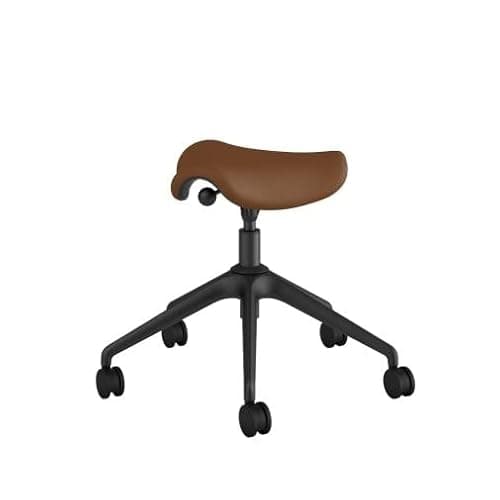
This is the best-constructed object in the guide. The Active Pony is Humanscale's tilting saddle variant, adding 7 degrees of movement to a one-piece triangular cushion with no backrest. Materials are contract-grade throughout, and the published warranty gives most seating a 15-year term. Cushions, textiles, and casters carry a shorter 5-year period. Humanscale's own Active Pony page calls the stool ideal for short duration computer work, clinical applications, and guest seating. Read that as the uses Humanscale built it for rather than a limit on longer sessions, because nothing published calls it unsuitable for those. Our own read is that a backless, narrow saddle offering seven degrees of tilt suits short spells better than a full working day. That judgement also rests on the thin peer-reviewed base for saddle seating. The configuration details reward attention too. Corvara is a semi-aniline, full-grain leather that Humanscale produces without chromium and grades for contract durability. The Pony is the narrower of Humanscale's two saddle widths, so it suits fewer bodies than the full-size Saddle. Buyers wanting the tall 5-inch or high 8-inch cylinder, or the optional foot ring, need a different configuration. Treat this one as a second seat you rotate onto.
What We Love
- Humanscale's terms give most seating a 15-year warranty, the longest structural term here. Cushions, textiles, and casters carry 5 years.
- The Active Pony adds 7 degrees of tilt to the saddle geometry, so the seat follows small weight shifts instead of staying rigid.
- Corvara is a semi-aniline, full-grain, chrome-free leather that Humanscale grades for contract durability rather than appearance alone.
- The line is BIFMA level and Greenguard certified, and Niels Diffrient designed the Freedom seating it belongs to.
- Humanscale offers standard 5 in, tall 5 in, and high 8 in cylinders, plus an optional foot ring for taller setups.
What Could Be Better
- Humanscale builds this line for short-duration and guest seating, not full desk days.
- It is the most expensive pick here by a clear margin.
- This configuration ships with the standard 5 in cylinder and no foot ring.
The Verdict
If build quality is what you are buying, the Humanscale Freedom Active Pony Saddle Stool is the object here. The 8.0 reflects 7 degrees of tilt, full-grain chrome-free leather, and a 15-year structural warranty term. It is also the most expensive pick. We read it as a perch for short sessions rather than an all-day chair.
Best height range: Branch Saddle Stool (ILOA Plus)
Branch Saddle Stool (ILOA Plus)
(Current price, subject to change)
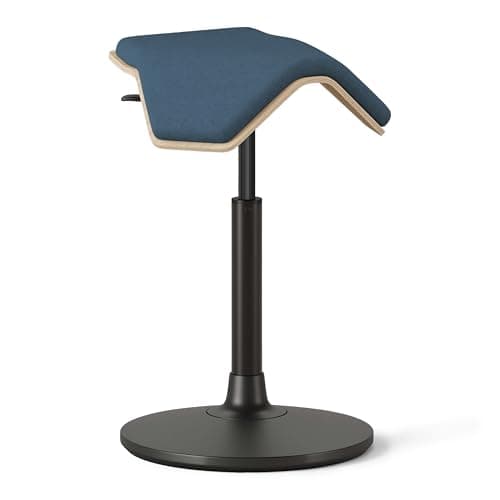
Branch sells this as a saddle stool, and the seat genuinely is one, but the base changes the product substantially. Branch describes a wobble base supporting movement across every plane: forward and backward, laterally, and vertically. That is the active-balance mechanism our wobble-stool guide covers, layered onto saddle geometry rather than replacing it. Whether the combination benefits anybody remains unsettled. The peer-reviewed base for both mechanisms is thin. A 2022 systematic review advised against chair interventions for lower back pain, and pooled no saddle seats. WorkWhileWalking's perching-stool coverage describes saddle geometry as compelling the pelvis into an ideal horseman's posture. What the specification does deliver is the widest travel in a single stool here, spanning 23.6 to 33.5 inches, and the highest confirmed capacity in this guide. Branch's own product page publishes a 2-year warranty, the shortest here; its site-wide schedule lists the stool at no tier at all. Construction is documented unusually thoroughly for the money. Branch specifies post-consumer polyester upholstery over PEFC-certified birch plywood, alongside steel and rubber components. The seat measures 16.9 inches wide and 14.2 inches deep, mounted on a comparatively compact 15.7 inch base. Manufacturing happens in Europe, from an original Finnish myKolme design.
What We Love
- The cylinder spans 23.6 in to 33.5 in. That 10 in range reaches standing-desk height without a separate model.
- It is rated to 265 lb, well above the Salli's 100 kg ceiling and the highest confirmed capacity in this guide.
- Materials are unusually well documented: post-consumer polyester over PEFC-certified birch plywood, steel, and rubber.
- It costs less than any other specialist saddle in this guide, and Branch documents its materials thoroughly.
What Could Be Better
- The wobble base reintroduces the balancing that saddle geometry exists to avoid.
- Branch publishes a 2-year term on the stool's own page, the shortest warranty in this guide.
- There are no casters, and the cushion is only 1.6 in thick.
The Verdict
If your desk stands up, the Branch Saddle Stool (ILOA Plus) reaches it. The 7.9 reflects a 23.6 to 33.5 in cylinder, a 265 lb rating, and documented recycled materials. It is also the lowest specialist price here. The catch is mechanical. Branch mounts the saddle on a wobble base, so balancing arrives alongside the geometry.
How We Score: DeskGear Saddle Stool Score
DeskGear Saddle Stool Score
Score Formula
0.30 * posture_geometry + 0.25 * adjustability + 0.20 * build_durability + 0.15 * comfort_over_hours + 0.10 * valueScore Factors
- Posture Geometry (posture_geometry)Whether the seat actually produces saddle posture — how it divides or grooves, where the pommel peaks, and how far it drops the thighs below the hips
- Adjustability (adjustability)Cylinder travel, the number of gas-spring and seat-size options, and whether the seat tilts — the levers that decide whether one stool fits your desk and body
- Build & Durability (build_durability)Materials, manufacturing origin, stated user capacity, and published warranty term, from Branch's 2-year term to Humanscale's 15-year structural coverage
- Comfort Over Hours (comfort_over_hours)How the seat holds up across a working session — cushion depth, seat width, backrest availability, and whether the maker positions it for perching or for full days
- Value (value)Delivered capability against price, rewarding stools that produce genuine saddle geometry without charging a flagship premium for materials you may not need
DeskGear Saddle Stool Score — Ranked
Salli Light Basic Saddle Seat
8.6/10Best overall — grooved specialist saddle, four gas springs from 400 to 875 mm, 100 kg rating, 5-year warranty.
Bambach Saddle Seat
8.3/10Best pedigree — the 1988 one-piece pommel saddle, four seat sizes, Australian-made, 5-year warranty.
Humanscale Freedom Active Pony Saddle Stool
8.0/10Best built — 7 degrees of tilt, full-grain leather, 15-year structural term, positioned for short sessions.
Branch Saddle Stool (ILOA Plus)
7.9/10Best reach — 23.6 to 33.5 in travel and a 265 lb rating, on a wobble base that adds active balancing.
Desk height, footrests, and the peer-reviewed limits
Saddle stools perch high, and that characteristic reshapes your entire setup. Bambach states it directly: a traditional office desk requires raising to benefit from the seat. Salli's longest gas spring reaches 875 mm, while the Branch cylinder tops out at 33.5 inches. A sit-stand surface therefore pairs considerably better than a conventional fixed desk. Your feet matter equally, because the mechanism operates through the hip angle and that angle collapses whenever your legs dangle unsupported. Plan on a footrest or a foot ring unless your chosen cylinder reaches the floor. Capacity is the second unavoidable check, and the published ratings differ substantially across this roster. Bambach publishes no capacity figure we could verify. Expect a genuine adaptation period as well. Bambach suggests several weeks, beginning at approximately 1 hour daily and alternating with a conventional chair. Both dental investigations pooled by that review allowed 10 and 12 weeks of acclimation before measuring anything. Those considerations feed the adjustability and comfort factors inside the weighted DeskGear Saddle Stool Score, which normalizes cylinder travel against a 5-year warranty tier. Raising the desk and adding a footrest enables the geometry to work as the peer-reviewed studies describe. Seat pressure deserves a mention too, because Salli itself argues publicly that a solid saddle loads the pelvic floor. That is a saddle manufacturer conceding the criticism, and it is the clearest reason the divided designs exist. We found no published study isolating perineal pressure on an office saddle stool, so treat the concern as mechanically plausible rather than demonstrated. Plan the purchase as a rotation rather than a replacement. We read the Humanscale as a short-bout seat, and Bambach recommends alternating with a conventional chair during acclimation. The four-subject trial reported higher discomfort in the lower limbs, particularly the hips and buttocks, even as lower back discomfort fell. A saddle stool that shares your day with a proper task chair asks far less of your hips than one that owns every hour. Anyone with existing hip or neck trouble should treat this category as a clinical conversation rather than a purchase.
What the price spread actually buys
The spread across this roster is wide, and it maps onto genuine capability differences rather than brand markup. Branch anchors the bottom tier, and it is the least expensive object here that genuinely straddles you. It also delivers the widest travel in any single stool here, at 9.9 inches. Salli's longest gas spring still reaches higher, at 875 mm (34.45 in), if you specify it at purchase. What Branch does not deliver is a long warranty: its published term runs 2 years, the shortest here. Stepping up to the Salli buys the divided seat itself, four gas-spring configurations, and a published 5-year warranty. The Bambach adds a four-size fit system and Australian manufacturing, the most serious answer to the fit problem anyone in this category offers. Humanscale occupies the top tier on materials and warranty rather than posture engineering, and its 15-year structural coverage is the longest here. Branch's 2-year term is the one place where the 5-year and 15-year terms above it genuinely earn their premium. The decisive comparison is the Salli versus the Bambach. That difference purchases seat sizing and a longer history rather than a superior mechanism. Compared to the flagship tier, the Salli produces most of the benefit for meaningfully less, which is exactly what the value factor inside our weighted DeskGear Saddle Stool Score rewards. That composite deliberately weights geometry above price, because the peer-reviewed case for saddle seating rests entirely on the geometry a cheaper round-seat stool never delivers.
When NOT to Buy
This guide covers the desk-grade saddle tier, and the exclusions follow a deliberate boundary. We excluded the substantial market of salon and spa stools selling between roughly thirty and a hundred and fifty dollars. Most are marketed as saddle stools without actually being saddles. Two checks separate the categories before you spend anything. A genuine saddle seat carries a raised front pommel and a pronounced thigh drop that opens the hip angle, perching you well above ordinary chair height. A spa stool substitutes a flat round cushion at normal task height, without either pommel or thigh drop. Boss Office Products' B245 Be Well remains the clearest worked example we examined. Its own specification table and dimensional drawing document a round pillow-top seat adjusting between 20.5 and 26.5 inches. That adjustment range is standard task height rather than saddle height. Boss misrepresents nothing and publishes both a 6-year warranty and a 275 lb capacity, but the stool cannot generate the geometry those peer-reviewed investigations actually measure. We additionally excluded the VIVO saddle stool, already rostered inside our kneeling chairs and posture stools guide. Wobble and balance stools represent a genuinely different mechanism, operating through active muscular correction rather than through hip geometry. They occupy our active wobble stools guide instead of this roster. One product here straddles that boundary honestly, because Branch mounts a saddle seat onto a wobble base. None of these excluded categories could score well on the DeskGear Saddle Stool Score anyway, because its heaviest weighted factor is the geometry they lack. Finally, we passed over unbranded listings quoting capacity figures without a warranty tier or an identifiable manufacturer standing behind them.
Who Should Buy What
Who Should Buy What
| If you are… | Recommended pick |
|---|---|
Most desk buyers trying a saddle Wants genuine divided-saddle geometry, four cylinder ranges, and a 5-year warranty, without paying flagship money for it. | Salli Light Basic Saddle Seat |
Buyers who need the seat sized Fit is the deciding variable, and a four-size seat range plus three gas-lift lengths matters more than the price difference. | Bambach Saddle Seat |
Clinicians and lab benches Works in short focused bouts at a high bench, values surgical-grade upholstery, and wants the original clinical design. | Bambach Saddle Seat |
The perch beside a good chair Already owns a proper task chair and wants a well-made second seat for short sessions, with the longest warranty term here. | Humanscale Freedom Active Pony Saddle Stool |
Standing-desk owners Needs a stool reaching 33.5 in, rated to 265 lb, and actively wants wobble motion alongside the saddle shape. | Branch Saddle Stool (ILOA Plus) |
Frequently Asked Questions
What is the difference between a saddle stool and a wobble stool?
They solve the problem through different mechanisms. A saddle stool works through seat shape. The contoured seat drops your thighs below your hips, rotates your pelvis forward, and lets your lumbar curve hold itself without a backrest. That is passive geometry. A wobble stool works through instability instead, using a rocking base that asks for continual muscular correction. The Branch stool here does both, mounting a saddle seat on a wobble base.
Is the 135-degree hip angle claim about saddle chairs true?
Not as usually stated. That figure traces to a 2006 conference presentation using positional MRI on 22 volunteers, and it described people leaning backward at 135 degrees, not straddling a saddle. A saddle keeps your torso upright and drops your thighs instead. A 2016 dental study did adjust a saddle stool to a 125-degree hip and knee angle. That figure is the setup the researchers used, not an angle measured on the sitters. The saddle it tested was a Salli, not a Bambach. On that stool lumbar posture ran into hyperlordosis, and the study named a different stool the most suitable of the three. Bambach's own guidance describes a 45-degree knee angle.
Is there real scientific evidence behind saddle seating?
Some, but less than the marketing implies. The best synthesis is a 2018 systematic review on PubMed Central covering only two studies and 150 dental students. It scored posture from static images rather than measuring pain, and reported very high heterogeneity. Its stated conclusion, on that limited base, was moderate evidence that saddle seats carried lower ergonomic risk than conventional seats. A 2022 systematic review went further, concluding that chair interventions are not recommended for reducing lower back pain because the evidence quality is very low to low. The chairs it reviewed were dynamic, ball, and lumbar-support designs, not saddle seats.
Can a saddle stool replace my office chair?
For most people, no. Treat it as a complement you rotate onto rather than a full-time replacement. Humanscale's own product page describes the Active Pony as ideal for short duration computer work, clinical applications, and guest seating. A 2007 study of four subjects recorded reduced lower back discomfort on the saddle seat, but higher discomfort in the hips and buttocks.
How long does it take to get used to a saddle stool?
Plan on weeks, not days. Bambach suggests a few weeks, starting at about one hour daily and alternating with a conventional chair while your body adapts. Both dental trials in the literature allowed acclimation before measuring anything, at 10 weeks and 12 weeks respectively. In the 2007 four-subject study, discomfort ratings rose on both seats across a single sitting session. That study measured immediate effects, not weeks of adaptation. Longer break-in figures circulating online come from retailer blogs rather than research.
Do I need a taller desk for a saddle stool?
Usually yes, and Bambach says so directly. Its guidance tells buyers that a traditional office or computer desk needs raising to benefit from the seat. Salli's longest gas spring reaches 875 mm and the Branch cylinder tops out at 33.5 in, both well above normal chair height. A sit-stand desk or a raised surface pairs best. Confirm the cylinder range against your desk before ordering.
Do saddle stools need a footrest?
Often, yes. The mechanism depends on your hip angle, and that angle collapses if your legs dangle unsupported. If the cylinder you choose puts your feet flat on the floor, you are fine without one. If it does not, plan on a footrest or a foot ring. Humanscale sells an optional foot ring for its saddle line, and Bambach recommends one for anyone working at drafting or standing height.
Is a split saddle better than a one-piece saddle?
No research settles it, and the designs come from different traditions. Bambach is genuinely one-piece with a raised front pommel. Salli describes its Light Basic seat as a single polyurethane piece with a central groove, and argues publicly that a solid saddle presses on the pelvic floor. Humanscale uses a one-piece triangular cushion. Choose on fit and on which maker's sizing system suits you rather than on the split alone.
What weight can a saddle stool hold?
It varies more than you would expect, so check before ordering. Salli rates the Light Basic to 100 kg, roughly 220 lb, the lowest figure in this guide. Branch rates its Saddle Stool to 265 lb, the highest confirmed figure here. Humanscale publishes no capacity on its own pages, and neither does Bambach, which is a genuine gap at these prices.
Who should not buy a saddle stool?
Anyone above the stool's rated capacity, and anyone with existing hip or neck trouble who has not spoken to a clinician. The posture is acquired, and tolerance is highly individual. The 2007 four-subject study reported higher discomfort in the lower limbs, particularly the hips and buttocks, even while lower back discomfort fell. The same 60-person 2017 study that recorded increased lumbar lordosis also found increased protraction in the cervical spine, which matters if your neck is already troublesome.
How much should I spend on a saddle stool?
The desk-grade tier in this guide runs from roughly three hundred and fifty dollars to just over fourteen hundred. Below about a hundred and fifty dollars you are almost always buying a salon or spa stool built for short treatment sessions, not a saddle at all. The specialist saddles from Salli, Bambach, and Humanscale sit well above that. What the extra buys is seat geometry, cylinder options, seat sizing, and warranty term rather than a different mechanism.
Bottom Line
Get the Salli Light Basic Saddle Seat if You want genuine divided-saddle geometry, four gas-spring ranges, and a 5-year warranty, and you sit comfortably under the 100 kg rating..
Get the Bambach Saddle Seat if Fit is your deciding variable and you want the original 1988 design, built in four seat sizes with a 5-year Australian warranty..
Get the Humanscale Freedom Active Pony Saddle Stool if You want the best-made object here for short perching beside a proper chair, with a 15-year structural warranty term..
Get the Branch Saddle Stool (ILOA Plus) if You pair it with a standing desk, need 33.5 in of reach and a 265 lb rating, and actively want wobble motion alongside the saddle shape..
You want one seat for full working days. Saddle stools are a complement to a proper task chair rather than a replacement, and the makers themselves say so.
Sources & Methodology
Methodology: DeskGear Saddle Stool Score — Formula: 0.30 * posture_geometry + 0.25 * adjustability + 0.20 * build_durability + 0.15 * comfort_over_hours + 0.10 * value. Factors: Posture Geometry (posture_geometry): Whether the seat actually produces saddle posture — how it divides or grooves, where the pommel peaks, and how far it drops the thighs below the hips | Adjustability (adjustability): Cylinder travel, the number of gas-spring and seat-size options, and whether the seat tilts — the levers that decide whether one stool fits your desk and body | Build & Durability (build_durability): Materials, manufacturing origin, stated user capacity, and published warranty term, from Branch's 2-year term to Humanscale's 15-year structural coverage | Comfort Over Hours (comfort_over_hours): How the seat holds up across a working session — cushion depth, seat width, backrest availability, and whether the maker positions it for perching or for full days | Value (value): Delivered capability against price, rewarding stools that produce genuine saddle geometry without charging a flagship premium for materials you may not need
Expert review sources used in this analysis:
- This site does no first-hand testing
- Specifications come from manufacturer documentation, verified 2026
- We reviewed Humanscale's published 15-year warranty terms directly on its own warranty page
- Its Active Pony custom page supplied the sentence calling the stool ideal for short duration computer work, clinical applications, and guest seating
- That is a statement of intended use rather than a durability limit, and Humanscale publishes no equivalent sentence for the Saddle
- We also reviewed Bambach's own site and FAQ, Salli's Light Basic product page with its 5-year term, and Branch's Saddle Stool page, which publishes a 2-year term
- We also reviewed Branch's site-wide warranty schedule, which omits the stool entirely, so the product page is the only source for that figure
- Clinical claims are drawn from the peer-reviewed record rather than marketing copy
- The 2018 systematic review by Gouvea and colleagues in PLOS ONE, read in full on PubMed Central as PMC6296655, pooled just two dental-student investigations and reported 95% heterogeneity
- Its stated conclusion was moderate evidence that saddle seats carried lower ergonomic risk than conventional seats
- It is the only source here with free full text in PubMed Central, and the four studies below are indexed on PubMed but sit behind publisher paywalls
- A 2007 study of four subjects by Gadge and Innes in Work, PMID 17942990, measured immediate effects only
- It reported reduced lower back discomfort alongside higher discomfort in the hips and buttocks
- A 2017 investigation by Truszczynska-Baszak and colleagues in Work, PMID 28777760, found saddle sitting increased lumbar lordosis while also increasing cervical protraction
- Its subjects were 60 healthy adults with a mean age of 24.7, not dentists or office workers
- A 2016 study by De Bruyne and colleagues in Applied Ergonomics, PMID 26975788, ran 15 dentists and 10 dental students through a simulated screening task
- It adjusted the saddle and a third stool to a 125-degree hip and knee angle, against 90 degrees for the standard stool
- That 125 figure is a setup value rather than a measured outcome, and the saddle tested was a Salli, not a Bambach
- Lumbar posture on the saddle was extended into hyperlordosis, and the authors judged the Ghopec stool the most suitable of the three
- A 2022 review by Channak and colleagues, PMID 33970803, rated chair-intervention evidence for back pain as very low to low quality
- It appeared in the International Journal of Occupational Safety and Ergonomics
- The chairs it pooled were dynamic, ball, and lumbar-support designs, and it included no saddle-seat study
- Mechanism framing also draws on WorkWhileWalking's perching-stool coverage, which we reviewed directly
- Every factor weight inside the DeskGear Saddle Stool Score is normalized against that same peer-reviewed record
- Where a specification could not be confirmed on a manufacturer page, we left it out rather than estimating
- Prices are list prices verified via the Amazon Creators API on 2026-08-16 and change frequently, so check the current price before buying.
Nicholas Miles is the founder of DeskGearHQ and a longtime smart home enthusiast focused on helping everyday homeowners make better technology decisions. He researches, compares, and writes about products across security, climate, lighting, leak prevention, sensors, home energy, and automation, with an emphasis on real-world usefulness, ecosystem compatibility, reliability, privacy, and long-term value.
Affiliate disclosure: DeskGearHQ earns affiliate commissions on qualifying Amazon purchases. Our scoring methodology is independent of affiliate relationships.