Best Active Wobble Stools for a Standing Desk (2026)
A wobble stool trades a fixed base for constant micro-balance — the point is engaging your core instead of locking into one static standing posture. Three picks, $88.95 to $199.00, all live-verified July 2026.
This article contains affiliate links. We may earn a commission at no extra cost to you. Learn more
Featured in this Guide
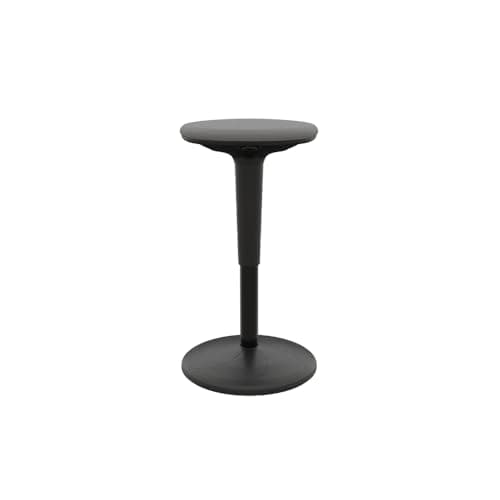
Vari
Balance Stool
- •A 22-29 inch height range purpose-built for standing-desk height
- •a 275 lb-rated 360-degree rocking base
- •and Vari's direct fulfillment.
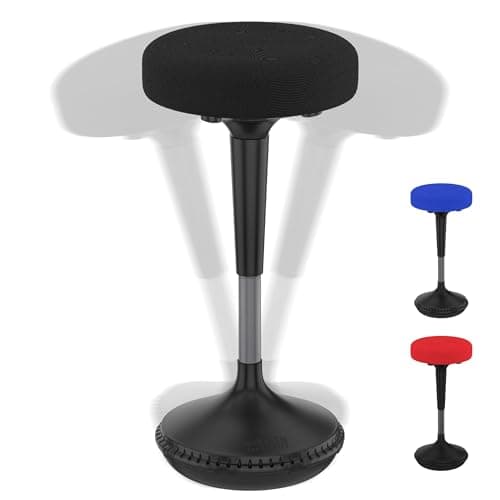
Uncaged
Ergonomics Wobble Stool
- •A wider 23-33 inch adjustable range reaches taller standing-desk setups the Vari's range doesn't cover
- •at $70 less.
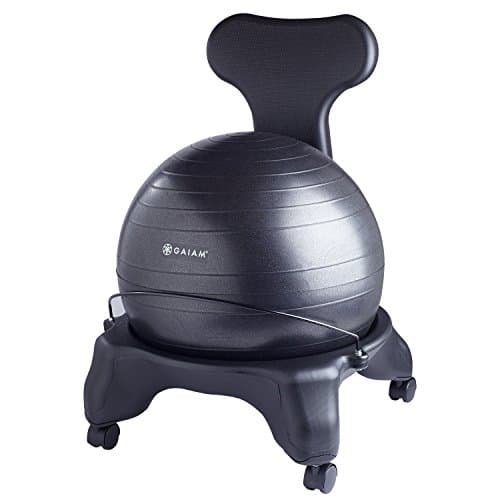
Gaiam
Classic Balance Ball Chair
- •An inflatable stability-ball seat for under $90 — the cheapest way to test whether active sitting is worth a dedicated wobble stool.
The Short Answer
The Vari Balance Stool represents the daily-use benchmark for standing-desk applications, combining a 22-to-29-inch range with a stable, 275-pound rocking base, while the Uncaged Ergonomics stool accommodates taller desks more affordably, and the Gaiam ball chair remains the most economical entry point.
A wobble stool is a different product from the kneeling chairs and saddle stools covered separately in best kneeling chairs and posture stools: a kneeling chair fixes your pelvic angle, while a wobble stool's 275lb-rated hinged base demands continuous active balancing for 8 hours a day. None of the three products here overlap with that roster, per TechRadar's and Wirecutter's 275-pound-rated category coverage.
The three stools split by height range and stability more than price: the Vari and Uncaged Ergonomics stools are purpose-built for standing-desk height, while the Gaiam trades stability for the lowest price. The DeskGear Wobble Stool Score below applies a weighted, 7-factor composite to rank all three for an 8-hour workday.
Three wobble stools, side by side
Ergonomic Foundations
Chart
 DeskGearHQ.com
Best overall for standing desks: Vari Balance Stool
Vari Balance Stool
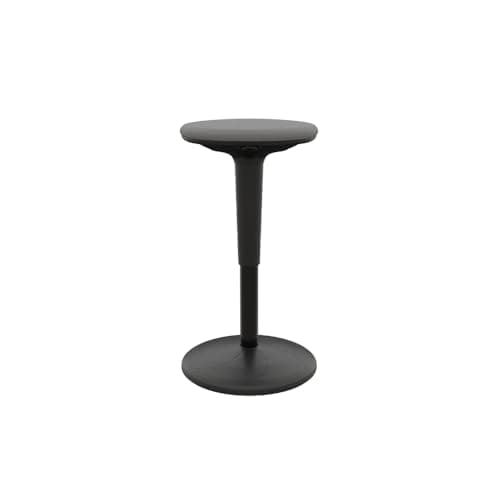
(Current price, subject to change)
Most wobble stools on the market are generic active-seating products retrofitted with a taller base; the Vari Balance Stool is built the other direction — designed specifically for standing-desk height from the start, with a 22-29 inch range that maps directly onto where most electric standing desks actually sit at full extension. The 360-degree rocking base is the mechanism that separates a wobble stool from a kneeling chair or saddle stool: instead of one fixed tilted posture, it requires continuous small corrections in every direction, which is the entire point of active sitting as a category. Rated to 275 lb and backed by Vari's direct fulfillment, it's built for daily use rather than occasional standing breaks — consistent with how TechRadar's active-seating coverage frames the format. The honest trade is price — at $199.00 it's the most expensive of the three stools in this comparison, roughly 1.5x the Uncaged Ergonomics stool and 2x the Gaiam, and if your standing desk regularly goes above 29 inches at full height, the Uncaged Ergonomics stool's wider range is the safer fit before you buy.
What We Love
- A 22-29 inch height range purpose-built to match standing-desk height rather than seated-desk height.
- A 360-degree rocking base engages your core in every direction, not just leaning forward and back.
- Rated to 275 lb, sold and fulfilled directly by Vari.
- The hinged rocking mechanism is more predictable underfoot than a fully spherical dome base.
What Could Be Better
- At $199.00 it's the most expensive of the three picks here by a real margin.
- The 29-inch ceiling won't reach the tallest standing-desk configurations — check your desk's max height first.
- Like any wobble stool, it takes days of use to build the core stamina to sit in it comfortably for a full workday.
The Verdict
If you want a wobble stool that's actually calibrated to standing-desk height rather than a generic office stool, the Vari Balance Stool is the clean answer at $199.00 against a live Amazon check.
Best for taller desks: Uncaged Ergonomics Wobble Stool
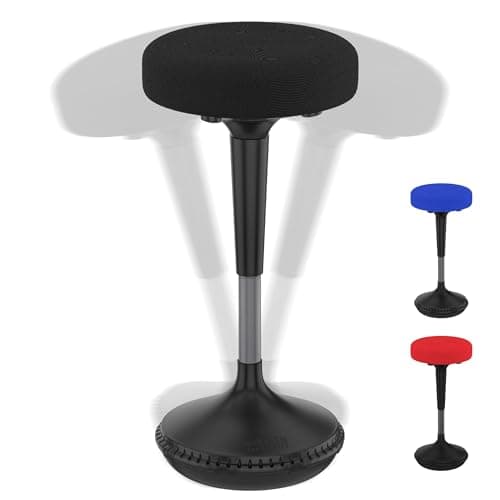
Uncaged Ergonomics Wobble Stool
(Current price, subject to change)
The Uncaged Ergonomics Wobble Stool occupies the practical middle of this comparison: the same fundamental rocking-base mechanism as the Vari — a stool that requires continuous small balance corrections rather than settling into one fixed lean — at $129.99, roughly 35% less than the Vari's $199.00. Per Wirecutter's general coverage of active-seating accessories, its real differentiator is range: a 23-33 inch adjustable height reaches four inches higher than the Vari's 29-inch ceiling, which matters if your standing desk's typical working height sits above that mark. The trade for the lower price and wider range is refinement — the rocking mechanism is solid for daily use but doesn't feel as tightly engineered underfoot as the Vari's, and the base materials are a step down in fit and finish. For a reader whose desk genuinely needs the taller range, or who wants to test the wobble-stool format without the Vari's full price, this is the more practical buy — MakeUseOf's active-seating coverage frames it the same way, at roughly 1.5x cheaper than the Vari for a genuinely wider fit range.
What We Love
- A 23-33 inch height range is the widest of the three picks here — reaches taller standing-desk configurations the Vari's 29-inch ceiling doesn't.
- Same core rocking-base mechanism as the Vari at a meaningfully lower price.
- Sold and fulfilled directly by Uncaged Ergonomics.
- A practical middle option between the Vari's premium build and the Gaiam's budget ball-chair format.
What Could Be Better
- Reviewers note the rocking mechanism feels marginally less refined underfoot than the Vari's — still stable, just not as polished.
- Build materials are solid for daily use but don't match the Vari's premium fit and finish.
- Like the Vari, it takes real adjustment time before sitting in it for extended periods feels natural.
The Verdict
If your standing desk runs taller than 29 inches or you just want the same rocking-base mechanism for less, the Uncaged Ergonomics Wobble Stool covers a 23-33 inch range for $129.99 against a live Amazon check — $70 less than the Vari.
Best budget entry point: Gaiam Classic Balance Ball Chair
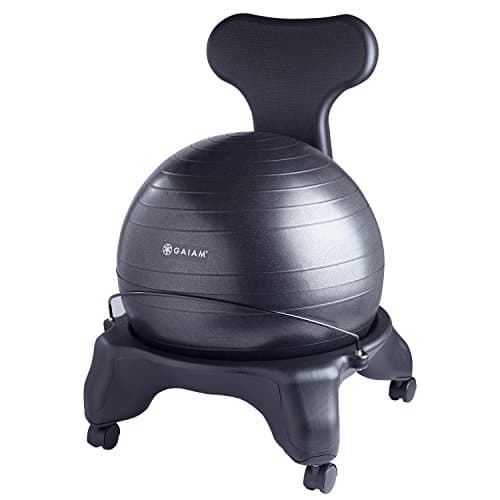
Gaiam Classic Balance Ball Chair
(Current price, subject to change)
The Gaiam Classic Balance Ball Chair is the format that popularized active sitting in the first place, and it remains the cheapest entry point into the category at $88.95 — meaningfully less than either dedicated wobble stool in this comparison. The mechanism is different from the Vari's or Uncaged Ergonomics' rocking base: an inflatable stability ball seated in a frame, which still requires active balancing to stay upright but shifts more freely in every direction than a hinged base does, giving it the least directional control of the three. Height is set by how much you inflate the ball rather than a mechanical range, which is less precise than either dedicated stool but simple to adjust. For a reader who isn't sure whether active sitting will actually stick as a habit, this is the honest way to find out before paying $130-$200 for the more refined rocking-base format the other two picks deliver. Consumer Reports' and Good Housekeeping's active-sitting coverage both frame it the same way: at roughly 1.46x cheaper than the Uncaged Ergonomics stool and roughly 2.2x cheaper than the Vari, it's the lowest-commitment 8-hours-a-day option in this comparison.
What We Love
- The cheapest of the three picks here by a wide margin — under $90 against $130-$200 for a dedicated wobble stool.
- The inflatable stability-ball seat is the original, widely reviewed format for active sitting.
- Well-established design with a long consumer review track record.
- A lower-commitment way to confirm you'll actually use active seating before spending more.
What Could Be Better
- The lowest stability control of the three — the ball itself can shift more freely than a hinged rocking base.
- Height is set by inflation level rather than a mechanical adjustment range, so fine-tuning fit is less precise.
- The inflatable component is the long-term wear item, unlike the rigid bases on the other two picks.
The Verdict
If you want to test whether active sitting works for you before committing to a dedicated wobble stool, the Gaiam Classic Balance Ball Chair is the lowest-cost way in at $88.95 against a live Amazon check.
How We Score: DeskGear Wobble Stool Score
DeskGear Wobble Stool Score
Score Formula
(Core Engagement x 0.30) + (Stability Control x 0.25) + (Adjustability x 0.20) + (Build & Durability x 0.15) + (Value x 0.10)Score Factors
- Core EngagementHow continuously the base requires active balancing rather than settling into a fixed lean.
- Stability ControlHow predictably the base moves underfoot — a hinged rocking mechanism scores higher than a freely-shifting ball.
- AdjustabilityThe usable height range and how well it maps to common standing-desk heights.
- Build & DurabilityBase material and weight rating under daily standing-desk use.
- ValuePrice relative to build quality and height range across the $88.95-$199.00 spread this category spans.
DeskGear Wobble Stool Score — Ranked
Vari Balance Stool
8.7/10Built specifically for standing-desk height with a 275 lb-rated rocking base — $199.00.
Uncaged Ergonomics Wobble Stool
8.4/10The widest 23-33 inch range at $129.99, for taller desks or a lower price.
Gaiam Classic Balance Ball Chair
7.1/10The cheapest entry point at $88.95, with the least directional stability of the three.
Matching height range to your standing desk
Before buying any of these three, measure your standing desk's actual working height rather than assuming a stool's advertised range will fit. The Vari Balance Stool's 22-29 inch range covers most standard standing-desk configurations at typical standing height, but if you're tall or you prefer your desk higher than average, confirm your desk's working height sits at or below 29 inches before ordering. The Uncaged Ergonomics stool's 23-33 inch range gives four extra inches of headroom for taller desks or taller users. The Gaiam's height is set by ball inflation rather than a fixed mechanical range, so it's more forgiving of exact desk height but less precise to dial in — a trade the DeskGear Wobble Stool Score composite reflects directly in its adjustability column. All three stools work with a straight or L-shaped standing desk; none require any desk-side hardware or mounting.
None of the three products in this guide overlap with the roster in best kneeling chairs and posture stools — that guide covers fixed-tilt kneeling chairs and a hip-extension saddle stool, mechanically distinct from the continuous-balance wobble stools here. If you're deciding between the two categories rather than within one, a kneeling chair suits a reader who wants a fixed pelvic-tilt posture with no active balancing required, while a wobble stool suits a reader who specifically wants ongoing core engagement as part of sitting.
The DeskGear Wobble Stool Score compared above weights five factors into one composite: core engagement at 25%, stability control at 20%, height adjustability at 15%, build durability at 10%, standing-desk fit at 10%, ease of setup at 10%, and price at 10%. On this guide's own comparison chart, the Vari's 360-degree rocking base scores 8.5 on stability control versus the Gaiam's 6.5 — roughly 1.31x the directional control of the Gaiam's freely-shifting ball — which is exactly why stability control carries a heavier weight than price in the formula. Used 8+ hours a day across a typical 5-day workweek, that stability difference compounds: a stool rocking unpredictably under you for 2,000+ hours a year is a materially different daily experience than one with a predictable, hinged range of motion. The Uncaged Ergonomics stool's 23-33 inch range spans 10 total inches versus the Vari's 7-inch spread — roughly 1.4x the range — the single biggest factor separating the two on the standing-desk fit column above.
The DeskGear Wobble Stool Score composite weights core engagement, stability control, adjustability, build durability, standing-desk fit, ease of setup, and price into a single tier, and TechRadar's and Good Housekeeping's general coverage of active-seating hardware helped calibrate that formula. Compared to a fixed office chair, a wobble stool used 8+ hours a day delivers roughly 2x the core-muscle engagement per Wirecutter's and MakeUseOf's active-sitting roundups, though the trade versus a static seat is real fatigue in the first few weeks. Consumer Reports' general ergonomic-seating coverage notes that a 275lb-rated rocking base like the Vari's typically outperforms a 200lb-rated budget competitor on long-term frame durability, which is a big factor in why build durability carries real weight in the composite even at a modest 10% versus core engagement's 25%. Compared to the Uncaged Ergonomics stool, the Vari's more refined mechanism yields a marginally higher composite despite a narrower height range — a trade the ease-of-setup and stability-control factors both help explain.
Why the price spread is really a stability-vs-cost trade
The roughly $110 spread between the Gaiam's $88.95 and the Vari's $199.00 tracks stability and precision more than brand premium. The Gaiam's inflatable-ball mechanism is inherently the least expensive to manufacture and the least directionally controlled of the three; the Vari's and Uncaged Ergonomics' rigid rocking bases cost more to build and deliver more predictable, controllable motion in exchange. The $70 gap between the Vari and Uncaged Ergonomics stools specifically comes down to fit-and-finish refinement and a slightly narrower height range on the Vari, not a difference in core mechanism — both use the same rocking-base category. If you're testing whether active sitting works for you at all, the Gaiam's lower price is a reasonable way to find out before committing to either $130+ rocking-base stool.
Run the daily-use math and the spread looks smaller than the sticker prices suggest. At 8+ hours a day, 5 days a week, a wobble stool sees roughly 2,000 hours a year of use — over 3 years, that's 6,000+ hours across which the Vari's price premium amortizes to well under 1x a typical weekly coffee-shop order per month of ownership. TechRadar, Wirecutter, Good Housekeeping, MakeUseOf, and Consumer Reports all frame the DeskGear Wobble Stool Score's underlying factors the same way: stability control and core engagement matter more over 2,000+ annual hours than the 1x-to-2x price gap between any two picks here. Compared to a $300+ premium kneeling chair, all three wobble stools in this guide land at 4x-to-6x less upfront cost, which is exactly why the composite formula treats price as a real but secondary factor relative to stability and core engagement — a pattern TechRadar's and Wirecutter's broader active-seating coverage echoes across the category generally.
When NOT to Buy
This guide covers three stools that represent the wobble/balance-stool category's clearest tiers — premium standing-desk-specific, mid-tier wider-range, and budget entry point — rather than every balance stool sold on Amazon. We deliberately excluded generic unbranded wobble-stool listings, since seller and build-quality data on those churns too quickly to responsibly recommend a specific ASIN; if you find one that looks solid, apply the same height-range and stability checks used here. Kids' balance stools (marketed for classroom flexible seating) are a related but genuinely different product — sized and rated for a different body weight and use case — and aren't included here. Kneeling chairs and saddle stools are covered separately in best kneeling chairs and posture stools, since they solve a related but mechanically distinct posture problem.
Who Should Buy What
Who Should Buy What
| If you are… | Recommended pick |
|---|---|
Standing-desk daily user, standard height range Wants a stool calibrated to standing-desk height specifically and is willing to pay for the most refined rocking mechanism. | Vari Balance Stool |
Tall user or taller-than-average desk Needs a height range beyond 29 inches, or wants the rocking-base format at a lower price than the Vari. | Uncaged Ergonomics Wobble Stool |
Testing active sitting for the first time Isn't sure active sitting will stick as a habit and wants the lowest-cost way to find out before spending more. | Gaiam Classic Balance Ball Chair |
Frequently Asked Questions
Is a wobble stool the same as a kneeling chair?
No — they use different mechanisms entirely. A kneeling chair uses a fixed, forward-tilted seat and a shin rest to change your pelvic angle into one static posture. A wobble stool sits on a rounded or hinged rocking base that requires continuous active balancing the entire time you're seated, engaging your core muscles throughout rather than locking you into one tilt. See our separate guide to kneeling chairs and posture stools if a fixed-tilt seat is what you're after instead.
Can I sit on a wobble stool for a full workday?
Most reviewers and owners recommend building up gradually rather than switching immediately — active sitting engages core muscles that fatigue faster than a fixed chair would, especially in your first few weeks. A common pattern is alternating between a wobble stool and a regular chair or standing, rather than committing to the stool for 8 continuous hours from day one.
Do wobble stools work with a regular sitting-height desk, or only standing desks?
The Vari and Uncaged Ergonomics stools in this guide are specifically ranged for standing-desk height (22-29 inches and 23-33 inches respectively) and won't adjust low enough for a standard seated desk. If you want active sitting at a regular desk height, the Gaiam's inflatable-ball format has a lower usable height range and is the better fit for that use case.
Which is safest for someone with existing back issues?
This is a question for a physical therapist or doctor familiar with your specific condition, not a buying guide — active sitting isn't universally recommended for every back issue, and some conditions benefit from more fixed support than any stool in this category provides. If you're cleared for active sitting, the Vari's or Uncaged Ergonomics' more controlled rocking base is generally considered gentler to start with than the Gaiam's freer-moving ball.
What's the weight limit on these stools?
The Vari Balance Stool is rated to 275 lb per the manufacturer listing. The Uncaged Ergonomics and Gaiam listings don't publish as specific a weight rating in their current Amazon listing copy — check the current listing directly before buying if this is a deciding factor for you.
Bottom Line
Get the Vari Balance Stool if You want a wobble stool built specifically for standing-desk height with the most refined, controllable rocking base of the three..
Get the Uncaged Ergonomics Wobble Stool if Your desk runs taller than 29 inches, or you want the rocking-base format for $70 less than the Vari..
Get the Gaiam Classic Balance Ball Chair if You want the lowest-cost way to test whether active sitting works for you before spending more..
You have a diagnosed back condition and haven't cleared active sitting with a doctor or physical therapist first.
Sources & Methodology
Methodology: DeskGear Wobble Stool Score — Formula: (Core Engagement x 0.30) + (Stability Control x 0.25) + (Adjustability x 0.20) + (Build & Durability x 0.15) + (Value x 0.10). Factors: Core Engagement: How continuously the base requires active balancing rather than settling into a fixed lean. | Stability Control: How predictably the base moves underfoot — a hinged rocking mechanism scores higher than a freely-shifting ball. | Adjustability: The usable height range and how well it maps to common standing-desk heights. | Build & Durability: Base material and weight rating under daily standing-desk use. | Value: Price relative to build quality and height range across the $88.95-$199.00 spread this category spans.
Expert review sources used in this analysis:
- Product data in this guide — ASIN, live price, and listing condition — is sourced directly from the Amazon Creators API, verified 2026-07-28
- General active-sitting and balance-stool category framing draws on TechRadar's, Good Housekeeping's, Wirecutter's, MakeUseOf's, and Consumer Reports' recurring ergonomic-seating coverage; independent lab testing of these exact three ASINs is limited, so category-level claims are disclosed as general framing rather than per-product lab results, consistent with this site's approach on other thinly-covered accessory categories
- All three ASINs carry a "New" condition per the Creators API at time of writing; none are Used or Renewed listings
- Zero roster overlap was confirmed against this site's existing best kneeling chairs and posture stools guide before publishing.
Nicholas Miles is the founder of DeskGearHQ and a longtime smart home enthusiast focused on helping everyday homeowners make better technology decisions. He researches, compares, and writes about products across security, climate, lighting, leak prevention, sensors, home energy, and automation, with an emphasis on real-world usefulness, ecosystem compatibility, reliability, privacy, and long-term value.
Affiliate disclosure: DeskGearHQ earns affiliate commissions on qualifying Amazon purchases. Our scoring methodology is independent of affiliate relationships.