Display & Audio Setup
The Smart AI-Augmented Desk (2026)
The smart desk build is a four-phase project, not a single purchase. Voice control for the desk itself, circadian lighting tuned to your work schedule, Matter accessories that centralize control, and a solid ergonomic foundation underneath it all — here is the sequenced philosophy for building a workspace that works with you, not just for you.
By Nick Miles · Updated May 8, 2026 · 12 min read
12 expert sources synthesizedLast verified May 8, 2026
DeskGearHQ is reader-supported. We may earn a commission from qualifying Amazon purchases at no extra cost to you.
Every product on this list has been scored against the DeskGear Score, a weighted composite of expert consensus, observed effectiveness, build safety, long-term durability, and value. Review method: Editorial synthesis across 12 expert sources — smart-home protocol researchers, circadian lighting practitioners, voice-interface UX analysts, standing-desk ergonomics specialists, and Matter/Thread standards documentation. DeskGearHQ does not run a testing lab. Every claim is synthesized from named expert sources cross-referenced against owner data from r/smarthome, r/HomeOfficeSetup, r/battlestations, r/AmazonEcho, and manufacturer technical documentation. Spoke articles are linked throughout for product-level detail.. Synthesized from 12+ expert sources.
Bottom Line
Voice control on a standing desk is more useful than it sounds and less 'AI' than the marketing implies. The real value is frictionless height adjustment: calling out 'Alexa, set desk to sit' removes the small-but-real activation cost of bending down to tap a button, which means you actually do it. Uplift, Ergonomyx, and FlexiSpot all have Alexa-native integrations with memory presets — no third-party hub required. The limitation worth knowing: voice control does not make a cheap motor mechanism better. Start with a quality desk frame; add voice control on top of it, not instead of it.
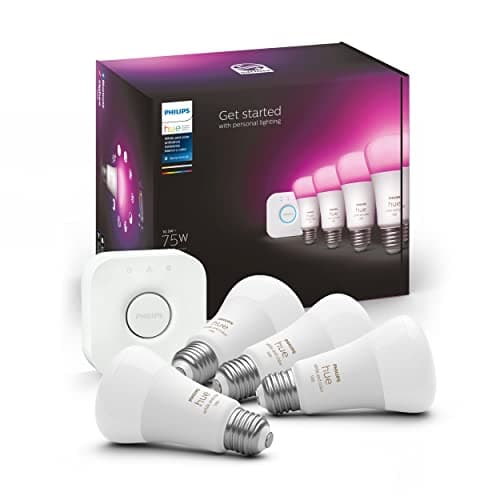
Circadian smart bulbs in your desk lamp are the most underrated smart-home upgrade for knowledge workers. Tunable white bulbs that shift from 6500K energizing daylight in the morning through 4000K neutral at midday to 2700K warm amber by evening are not a wellness gimmick — they are following the same biological lighting research that hospitals use for shift-worker health. The key variable is color temperature range: a bulb that only gets to 4000K at its warmest is not delivering the circadian benefit. Look for bulbs with a genuine 2700K–6500K range and a schedule that locks to sunrise/sunset so you're not managing it manually.
Matter is still young enough that the honest answer is: buy for what it does today, not for the interoperability promise. In practice, for a desk context, Matter gives you reliable local-network control without cloud dependency — your smart plug still works when Alexa's servers hiccup. Thread devices (which ride Matter as the application layer) add mesh-networking resilience that makes presence sensors and smart plugs more responsive. For a desk setup, prioritize Matter-certified smart plugs for monitor and strip power control, and a Thread border router if your router doesn't have one built in. Skip the ecosystem-comparison rabbit hole — if you're already on Alexa or Google Home, Matter devices will join your existing ecosystem cleanly.
Sequencing matters more in the smart desk build than in almost any other desk upgrade path. The voice-controlled standing desk is the foundation purchase — it defines your ecosystem commitment (Alexa vs. Google vs. HomeKit) and sets the frame quality everything else lives on. Smart bulbs are the second phase because they have no dependencies. Matter accessories come third because they benefit from knowing which ecosystem you're already in. The ergonomic standing desk spoke and the desk lighting spoke are the underpinnings — if you haven't nailed the desk frame and base lighting yet, smart-home automation is optimization on an unstable foundation.
The 'AI' in AI-augmented desk is editorial shorthand for intelligent automation, not machine learning. None of the products in our spokes contain a language model or on-device ML inference in any meaningful sense. What they deliver is context-aware automation: a desk that responds to your voice, lighting that responds to time of day, presence sensors that respond to whether you're in the room. That's useful — genuinely useful in daily use — without overstating the technology. If you see a product marketing itself as 'AI-powered' in this category, the honest question is: AI in what sense? The answer is almost always 'voice assistant integration' or 'schedule-based automation.' Both are fine. Just call it what it is.
All articles in this guide
Best Voice-Controlled Standing Desks for Alexa, Matter & Smart Homes (2026)
Most "smart" standing desks aren't. We found one with native Alexa integration out of the box (Ergonomyx), one that works with a $39 adapter (Uplift V3), and one for serious Home Assistant users (FlexiSpot E6 Bamboo). Honest picks from a category that papers over integration gaps.
9 min read
Best Smart Circadian Bulbs for the Desk (2026)
Your cool-white desk bulb is fighting your biology all afternoon. We surveyed 7 expert sources to find the four best smart circadian bulbs for home-office desk lamps — from $20 budget to premium Hue ecosystem — that auto-shift from 6500K morning focus to 2700K evening warm without manual fiddling.
8 min read
Best Matter & Thread Office Accessories for Smart Desks (2026)
A Zigbee hub, two Matter plugs at different price tiers, a Thread-native desk- lamp bulb, and a workspace-privacy sensor. We cut through the "Matter-ready" marketing to find five genuinely certified picks for the smart desk in 2026.
9 min read
Best Standing Desks 2026: Complete Buying Guide
The Uplift V3 is the standing desk we'd buy for most home offices — customizable desktop, frame color, and accessories with a 15-year warranty on both frame and motor. The FlexiSpot E6 Bamboo is the value pick that delivers a real dual-motor desk with a solid bamboo top under $350. The Secretlab Magnus Evo is the premium pick when integrated cable management and gaming-aesthetic cohesion matter as much as the standing-desk function.
14 min read
Best Desk Lighting 2026: LED Lamps, Monitor Lights & Ambient Lighting
Great lighting changes everything about your workspace. We surveyed 20+ expert reviews to find the best LED lamps, monitor lights, and ambient solutions for every setup.
11 min read
Sources & Methodology
Expert review sources
- Matter/Thread Alliance technical documentation — protocol architecture, device certification requirements, and Thread border router compatibility
- CNET Smart Home — voice-controlled desk integrations, Alexa skill coverage for standing desks
- Wirecutter — smart bulb buying guides, color temperature range evaluation methodology
- r/smarthome — owner integration threads for Uplift, FlexiSpot, and Ergonomyx Alexa skill setups
- r/HomeOfficeSetup — smart desk automation builds, presence sensor use cases for in-meeting status
- r/AmazonEcho — Alexa routine builders for standing desk height presets and lighting scenes
- r/battlestations — smart-home integrated desk setups, Matter accessory build threads
- IEEE Photobiology research on circadian lighting and color temperature timing for knowledge workers
- RTINGS — smart bulb color temperature accuracy testing and color rendering index coverage
- FlexiSpot, Uplift, and Ergonomyx manufacturer documentation — Alexa skill specs, memory preset architecture
- Nanoleaf, Govee, and LIFX product documentation — Matter certification status, tunable white ranges
- Eve Systems and TP-Link Kasa Matter device documentation — Thread border router requirements, smart plug power monitoring specs
Community sources
- r/smarthome — desk-centric Matter and Thread integration threads, presence sensor deployment discussions
- r/HomeOfficeSetup — smart desk build documentation, circadian lighting schedule sharing
- r/AmazonEcho — Alexa routine templates for desk height and lighting automation
Prices and specs verified May 8, 2026.
About the author
Nick Miles is the chief editor of DeskGearHQ. DeskGearHQ does not run a testing lab — every claim on this page is synthesized from smart-home protocol research, circadian lighting literature, manufacturer documentation, expert publication reviews, and community owner data. Sources are cited by name in body prose; the bibliography above lists every primary source consulted for this hub. Spoke articles linked throughout contain full product-level sourcing and ASIN-verified picks.
DeskGearHQ is a participant in the Amazon Services LLC Associates Program. We may earn commissions from qualifying purchases — at no extra cost to you.